Conference Proposal Drafter
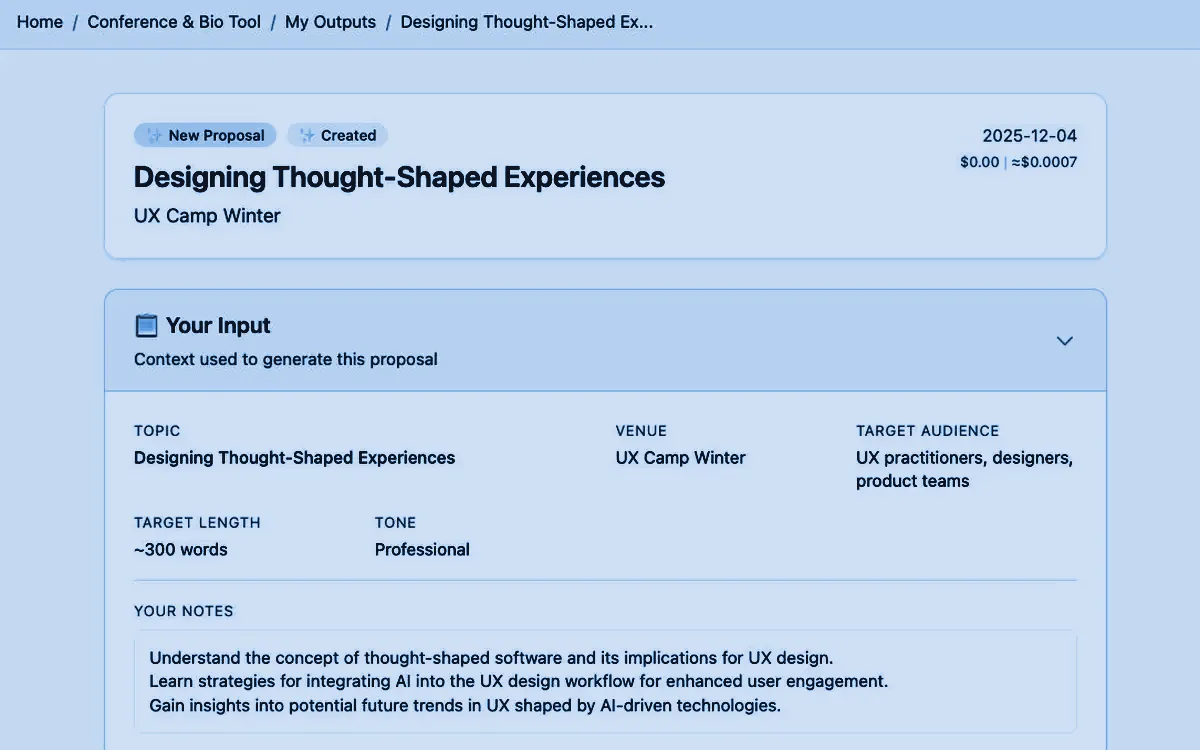
We start with the essentials any organizer asks for, the conference, the topic, the audience, a word limit, a tone, and whatever rough notes we have, then it drafts a full proposal grounded in the same sources we would reach for by hand.
It works in five passes we can watch arrive. First the argument underneath the talk, then three title options with the case for each, the draft itself, a line by line rationale naming the chapter or guide behind every move, and a few proposals from past events that took a similar shape. The run takes about seventy-five seconds on our own hardware, and nothing we type leaves the bench.
How this works
The drafter reads a shelf of conference coaching sources, a book on speaking, an article on writing proposals, and three coaching guides, then writes against what they actually say. Five calls run in order: it shapes the argument, writes title options, drafts the proposal, explains sentence by sentence why the draft works and which source backs each choice, and finds past proposals on comparable topics.
Each call appears the moment it finishes rather than at the end, so the argument is on screen at about ten seconds and a full draft at about forty.
What the rationale is doing
The rationale is the part worth reading twice. It quotes the draft back at you and names the chapter or guide behind each move, so you can disagree with the reasoning rather than just the wording. Which sources turn up varies by topic, and it is often a single chapter.
The comparable proposals are references
The past proposals we surface are other speakers’ submitted talks, offered as reading. They are examples of the form, not endorsements of your topic.
This is a starting point
What comes back is a first draft to argue with, not a finished submission. The draft runs long on purpose, the title options are three different bets rather than one answer, and the work of making it yours is still yours. Nothing you type leaves the bench, and nothing is saved: results live in this page for ten minutes and there is no link to come back to.